Showing posts with label Symbian Foundation. Show all posts

Thursday, February 25, 2010

First glimpse: Nokia's Symbian^4 operating system !

Want a better idea of what Symbian^4 will look like? Then check out videos below by fiercewireless


Tuesday, February 23, 2010

Nokia EVP Anssi Vanjoki talks about the Nokia N97

In this video Anssi Vanjoki about the Nokia N97. He notes that it has been a tremendous success for Nokia in terms of how many have been shipped and how much money it has made Nokia, but it has been a disappointment in terms of the experience quality for the consumers. He moves on to describe how Nokia fixed the situation (PR 2.0) and how Symbian^3 will be ensuring it does not happen again.


by Rafe Blandford and Ewan McLeod

Monday, February 22, 2010

Nokia X10 / Codename: X001 !

Nokia X10 "release documents" have been caught on video by the way !

- QWERTY sliders handset
- runs Symbian S^3.
- ARM Cortex A8 600MHz processor, along with 256MB of RAM, 32GB or 16GB of internal storage
- 3.2-inch AMOLED capacitive touchscreen.
- 5 megapixel camera

Jo Harlow, SVP of Smartphones in Nokia

Jo Harlow. Senior Vice President of Nokia smartphones explains what is the most significant difference in Symbian^3 for Nokia users

Thursday, February 18, 2010

Ideas transformed into code !

Almost 1000 ideas have been submitted to Symbian Ideas since its public launch in October 2009. After such a short time, it’s exciting to see that eight ideas are currently being implemented and a further twenty-one have been validated and require an individual or company to develop and contribute the code for the new or enhanced platform features or applications.
Ideas that will be realised as new Symbian features include:
Symbian applications that are under development as a result of ideas submitted to Symbian Ideas include:
  • “Carbonfund“, a mobile CO2 calculator which calculates your carbon footprint and allows you to offset it using Paypal. Developed by OpenPath Products in collaboration with Carbonfund.org and Open Mobile Solutions, a beta will be demoed at Mobile World Congress.
  • A Wikipedia widget to help you access Wikipedia from your mobile both quickly and with ease. Developed by Ivan Litovski of the Symbian Foundation, who re-purposed code that is now freely available on the Symbian developer website. The widget is now available for free from Symbian Horizon.


For the uninitiated, Symbian Ideas is a way for anyone to influence the Symbian roadmap and the future of mobile. Users contribute ideas for the enhancement and extension of the Symbian platform (the operating system, the user interface, the applications) and the way the Symbian Foundation functions. Now that the Symbian platform is completely open sourced, there is no barrier to developers who wish to experiment, innovate and implement ideas.

The Symbian Ideas community is not the exclusive domain of developers. The hope is that individuals with diverse types of expertise and insight will escape their silos and use the site to propose, refine and implement new ideas for mobile. These individuals might be users, they might be healthcare professionals, or bankers, or automotive engineers… anyone with insight and ideas. Innovation is has sometimes seen as the product of an isolated ‘eureka’ moment. But it has also come to be viewed as the result of pooling diverse opinions and skills in order that existing concepts and ideas can be combined in new and unexpected ways. Bringing a diverse community together, with a common subject to debate, will make the Symbian platform truly innovative.

Via : blog.symbian.org

Wednesday, February 17, 2010

The Symbian Foundation Joins Adobe's Open Screen Project

The Symbian Foundation announced that it is joining the Open Screen Project, an industry initiative led by Adobe dedicated to enabling the Adobe® Flash® Platform across a broad range of devices.

The work of the Open Screen Project will help deliver Adobe Flash Player on future versions of the Symbian platform. The rich and open capabilities of the Symbian platform combined with the Flash Player will enable Symbian device users to benefit from the huge amount of Flash-based web content for a vivid and complete Internet experience.

“It’s difficult to imagine the Internet without the creativity of the millions of developers using Adobe Flash technology, so we’re excited to be able work with industry leaders in the Open Screen Project to offer the option of Adobe Flash to our community. This is an important step, alongside our open source initiatives, to provide a powerful Internet experience on the Symbian platform,” said Robert Ackland, Technology Manager for Runtimes, Symbian Foundation.

“We’re delighted to welcome the Symbian Foundation into the Open Screen Project,” said David Wadhwani, General Manager and Vice President, Platform Business at Adobe.

Via : finance.yahoo

Monday, February 15, 2010

Symbian^3 UI Video demo !

The Symbian^3 (S^3) platform is here! S^3 is the first entirely open source release following the platforms transition to an open source license on February 4th, 2010, which was the largest of its kind in history.

Watch the video below : http://www.youtube.com/user/NokiaConversations#p/u/0/rdGyZYrix9g

Symbian^3 on Cortex A9, Symbian^4 Screenshots, Symbian^5 & ^6 go MultiCore


Boy that’s a lot of Symbian^’s in one title.

Jay over at MyNokiaBlog sure found a couple jewels lately.
First up, apparently some Symbian^4 screenshots were released yesterday. There seems to be a whole lot of changes (all good!).
  • New Smoother Font (Veranda apparently but that depends on the device creator)
  • Multiple homescreens (Different wallpaper possible on each Homescreen)
S^4

  • New App switcher icon on the top right (similar to the one on Maemo 5, means no more press-and-hold-menu-button)
S^4

  • Both locked-to-position type, and movable type Widgets
S^4

  • Drop down Menu bar at the top (which will contain more options)
S^4


The resolution still seems to be 640×380 though. I’m hoping they bump it up to atleast 800 × 480 pixels (like Maemo 5) ? Also this seems to be primarily touch, so no word on how the Non-Touch Symbian^4 UI might look like (or if it would be any different).
Also here’s hoping for some decent animation too, in Symbian^4 eh ? Lot’s more over at MyNokiaBlog.
Out of all these, the Toolbar, Menu bar and back button (among some other features) arnt going to be in Symbian^3 though.
Then to add to that, the Symbian Roadmap was released today, which lists their future goals and intentions too. As Jay has noted :

  • Apparently there’s a Symbian^5 and Symbian^6 already on the charts.
  • Symbian^4 might have multicore support sometime in 2010
  • Symbian^3 has kernel support for multicore processors which will achieve better performance with better battery life!
  • Symbian is designed for low power consumption from the ground up and now leading the wave in low power efficiency.
  • Symbian^3 is running on dual Cortex A9 (which is awesome, and similar to what the N900 is running on right now).
  • A9 will allow recording of up to 1080p.
  • High end 3D graphics accelerator to bring PC-like web browsing
  • Symbian^3 devices will be available from (July-ish onwards) 2010
  • Dual Core devices will be shipping in 2011
  • Symbian^4 devices will be available from 2011 [H1]
  • Symbian^5 devices will be available from 2011 [H2]
  • Symbian^6 devices will be available from 2012 [H1]
Also, some interesting points from the roadmap:
  • There are 33 Symbian^1 devices so far, from Samsung, Fujitsu, Nokia, Sony Ericsson and Sharp.
  • Over 100,000 man years of development
  • Over 300,000,000 Symbian devices shipped
s3

In Symbian^3 :
  • Easier to use: Single tap across the UI,

    support for gestures such as pinch and flick
  • Faster: ScreenPlay uses hardware

    acceleration to deliver a blazingly fast UI
  • Watch HD movies and play games on TV via


    HDMI
  • Improved Homescreen: Multiple pages,

    new widget manager, more powerful widgets
  • New app: Podcasts
  • Radio app: “Buy now” from music stores
  • One click connectivity makes connecting

    to the internet a breeze
  • Multicore support

s4-qt

While, in Symbian^4 :
  • A fresh new look for all applications, based on Qt.
  • Direct access to key functionality and beautiful effects and transitions in a streamlined user interface.
There is a whole bunch of exciting stuff, such as Messages being sorted as Conversations in S^4 (which we would have thought would already be in S^3 ?) and such, so do check out the Symbian Roadmap.

Or view it below :
10.02 Symbian Platform Roadmap v1.0

I gotta say, as someone who’s stuck to Symbian since it first started out with the Nokia 7650 (it’s first mass market phone), I cant help but feel overjoyed to see where they’re going to take it.
Ofcourse I’m totally impatient too ! Symbian ^4 (as good as S^3 might be) cant get here fast enough for me.
I also want to take a second out to say “Well Done !” to the crew over at Symbian ! Make us proud, guys !

[Images via : MyNokiaBlog]

Via : zomgitscj

Friday, February 12, 2010

Symbian’s Social Mobile Framework puts ’social’ in the operating system


Symbian is embracing social mobile services in a very big way as James Aley of the Symbian Foundation explains in detail in today’s video. They’re essentially building support for social services such as Twitter, Facebook and so on right into the operating system — so, as a developer, you can simply make a call to the OS for a list of currently active friends irrespective of what actual service they’re using. The possibilities of this are pretty substantial. Expect, for example, to see a whole array of applications using social services with ease. James elegantly explains the concept in this video. If you’d like a little more detail, Rafe produced this related article on All About Symbian. Have a watch!

You can also view the Symbian Wiki Social Mobile Framework pages for more information.

Via : mobileindustryreview

Thursday, February 4, 2010

Symbian Goes Open Source and Free

The source code for the ten-year old Symbian platform will be completely open source and available for free starting Thursday. The transition from proprietary code to open source is the largest in software history, claims the Symbian Foundation.

“The dominant operating system provider out there is Symbian,” says Lee Williams, executive director of the Symbian Foundation, “and now we are offering developers the ability to do so much more.”

Symbian, which powers most of Nokia’s phones, has been shipped in more than 330 million devices worldwide. But in the last few years, Symbian has seen more than its fair share of changes. In 2008, Nokia, one of Symbian’s largest customers, acquired a major share in the company. Nokia then created the Symbian Foundation to distribute the platform as an open source project, and began the process of opening up the source code that year.

Meanwhile, the operating system has seen new rivals crop up. Google’s Android, which is based on a Linux kernel, has become a favorite among handset makers such as Motorola and HTC. And it’s based on an open source foundation too.

Symbian’s move to open source has been completed four months ahead of schedule and it offers mobile developers new ways to innovate, says Williams. Any individual or organization can now take, use and modify the Symbian code for any device, from mobile phone to a tablet.

Similar as it may sound to Android’s promise, there are major differences, says Williams.

“About a third of the Android code base is open and nothing more,” says Williams. “And what is open is a collection of middleware. Everything else is closed or proprietary.”

Symbian is also ahead of Android in that it will publish its platform roadmap and planned features up to 2011, he says. And anyone can influence that roadmap or contribute to new features.

“Open source is also about open governance,” says Williams. “It’s about letting someone other than one control point guide the feature set and the asset base.”

But will that be enough for Symbian to steal away customers lured by a snazzier and younger rival?

Via : wired

Sunday, January 10, 2010

Preview of the Upcoming Firmware Update for the Samsung i8910

This is a preview of the firmware update for the Samsung i8910 Omnia HD expected in late January 2010. This is not the final update that will be released (it's i8910XXIL3), a more recent version will be released without the bugs mentioned.


The update features kinetic scrolling, updated web browser and an updated graphics engine as stated on Samsung's website and here. Also in the video are demos of some apps from Samsung Mobile Innovator and Qt applications.

More to read here and here !

Friday, January 8, 2010

Progress on the Symbian^3 and Symbian^4 contribution plans

Let’s have a recap on where we are today!

Symbian^3 is almost there !

Symbian^3 is nearing Functionally Complete (FC is in Q1 2010, likely to be February) and the contributions have come fast and thick over the last month. Of the 43 package feature tracked in the integration plan for Symbian^3, 30 have already been contributed to the foundation code line. These are:

- Multipage Homescreen – Provide multiple home screen supports
- 3PC – Bearer mobility support in 3PC and adoption
- WDP – Proven Writeable Demand Paging platform support
- HD video – Support for files of over 2GBs that will enable HD video
- One-click connectivity – Simpler connection dialogue that requires one click only
- Song recognition and music store integration with radio application
- Remote contact look-up – plug-in framework to allow easy integration of remote contact look-up

You should expect all of them to be included in the S^3 PDK3.0.f (planned for week03). In addition, QT for Symbian is now available from the foundation repositories under LGPL and it will be included in future PDKs (Product Development Kits).


Symbian^4 is ramping up

So Symbian^3 is progressing nicely, and at the same time Symbian^4 is starting to build up a substantial contribution plan with already 60 Package Features.

Symbian^4 is mainly known for the complete overhaul of the UI environment, but today I would like to highlight the ISB ECAM contribution plan.

It will provide the capability to use a PC development environment (and consequently a better debugging experience) for camera applications, which until now can only be tested using a production hardware. But I am also interested on the 3 reasons for contributions that Shohei Yoshida gives:

“To raise the company’s profile [...] to the Japanese market as well as global markets”
“To promote our vertical integration business”
“To aim ISB’s Symbian distribution [...] a Japanese version of the SDK”

It is a great example on how a member is contributing in order to fulfill their own need and it is leading to a better solution that will benefit the whole community.

Via : blog.symbian

Thursday, November 26, 2009

FancyFon™ joins Symbian Foundation

Monday 23rd November 2009 – Cork, Ireland – FancyFon Software Ltd. today announced that it has joined the Symbian Foundation, which, together with its ecosystem, is creating the most proven, open and complete mobile software platform. The platform is based on Symbian OS and software assets contributed by Nokia, NTT DOCOMO, and Sony Ericsson, including the S60 and MOAP(S) user interfaces. Portions of the source code are already being moved to open source, under the Eclipse Public License. By mid-2010, this process will be complete.

“The Symbian Foundation welcomes FancyFon into the community,” said Shaun
Puckrin, head of community support for Symbian. “Developers and ISVs are crucial to creating the richest possible user experiences. We are eager to see the innovations that FancyFon Software will bring to Symbian consumers.”

As a member of the Symbian Foundation, FancyFon gains the immediate right to license the Symbian Foundation platform, royalty free and without source code fees; participate in the governance of the foundation; and take part in joint marketing and branding campaigns.

About FancyFon
Established in 2006, FancyFon provides a portfolio of industry-leading solutions for the mobile device lifecycle management market, enabling any number of mobile phones or network devices using a variety of operating systems - including RIM, Symbian, Apple, Windows Mobile, Android and Java-based feature phones - to be centrally and remotely managed, over the Internet. FancyFon Mobility Center (FAMOC™) provides asset, configuration, application, and security management, as well as remote support for handsets based on all of these mobile platforms, either as a hosted or as an on-site solution. With its head office in Cork, Ireland, FancyFon customers include service providers, large enterprise and government organizations in Europe and the United States. www.fancyfon.com


About Symbian Foundation Limited
The Symbian Foundation is an independent, non-profit organisation whose mission is to enable an open ecosystem that collaborates to create the most complete and richest user experiences for mobile devices. Symbian maintains the code for an open source software platform based on Symbian OS and software assets contributed by Nokia, NTT DOCOMO, and Sony Ericsson, including the S60 and MOAP(S) user interfaces.

Portions of the platform's source code have already been moved to open source, under the Eclipse Public License. By mid-2010 this process will be complete, making the platform code available to all for free.

The foundation software licensing model and governance structure has been designed to secure transparency, encourage contribution and maintain platform consistency. The foundation promotes collaboration, contributions and active participation, and operates as a meritocracy.

Symbian's board of directors is comprised of the following companies: AT&T Mobility LLC, Fujitsu Limited, NTT DOCOMO, Inc., Nokia Corporation, Qualcomm Innovation Center, Samsung Electronics Co. Ltd., Sony Ericsson Mobile Communications AB, ST Microelectronics NV, Texas Instruments Inc., Vodafone Group Services Ltd.
The Symbian Foundation now occupies offices in the UK (London), US (Foster City), Japan (Tokyo), and Finland (Helsinki), and will soon have a regional operation in China (Beijing).

For more information please visit www.symbian.org or blog.symbian.org.

Friday, November 13, 2009

Samsung: 'We are investing further in Symbian "

Samsung's Vice President Dong Zhou Li said two days ago that Samsung is abandoning the Symbian mobile phones. Now Samsung makes completely on. "We want to deny that in which the task. More Samsung Phones with Symbian is on its way and we invest further in Symbian, "said Samsung's Information to Mobile.

Contrary to what Samsung Dong Zhou Li claims Samsung is therefore invest further in mobile phones with Symbian.

- I want to refute the information provided will be that we would be going to abandon Symbian. We were one of the first members of the Symbian Foundation, and we will invest further in Symbian as one of our platforms, "says Erik Johannesson.

- We will continue to invest broadly, on Symbian, Android and Windows Mobile. The reasons why we do it is that we want to offer valalternativ to users.

So it was a misunderstanding that Dong Zhou Li would claim otherwise?
- I can not of course take back his statement in itself. But I can assure you that we invest further in Symbian. And it's not Samsung in Sweden who say this, I have talked to several people in Korea now, and Samsung's position is that we will invest further in Symbian.

Can we look forward to more Symbian phones from Samsung now then?
- Yes it is about New Symbian Phone from Samsung. Just such a thing as Omnia HD, running on Symbian, became this year's multimedia at Mobile Gala this year is an example of the type of phone is something we should continue.

Via : mobil

Wednesday, November 11, 2009

Qt on Symbian demo !

Here we go with some Qt demos on Symbian !


Wednesday, October 21, 2009

Symbian kernel now open source !

Symbian released the source of the Kernel and Hardware Services package under the open source EPL licence. You can download the source, read it, modify it, build it and run it on your PC or a reference board for free. This page contains information to help you get started.

The kernel release is nine months ahead of schedule and reflects the positive momentum behind Symbian's ambitious platform migration plan, which began with the release of security code under EPL.

16 out of a total 134 platform packages have now been released into open source since the code was first made available on the Symbian Foundation servers in April 2009.

"The release of the microkernel demonstrates three vital, guiding principles of the foundation: first, the commitment of many community members to the development of the platform - in this case, Accenture, ARM, Nokia and Texas Instruments Incorporated (TI) all made contributions; second, progress in fulfilling our commitment to a complete open source release of Symbian; and third, a tangible example of providing the most advanced mobile platform in the world" said Lee Williams, Executive Director, Symbian Foundation.

"I would like to congratulate Symbian for not only making the source code of its kernel open source, but also the compiler and simulation environment,' said Andrew S. Tanenbaum, author of global bestsellers and widely regarded computer science texts including, Operating Systems: Design and Implementation and Modern Operating Systems. 'The code will be of great interest to programmers and enthusiasts of the Symbian system. It will also show many people that microkernels are widely used in important commercial environments, where both reliability and high performance are essential."

The complete kit, which can be downloaded from http://tiny.symbian.org/SymbianKernel, consists of:

- Open source kernel and other complementary packages
- High performance ARM compiler toolchain (RVCT4.0): free to developers and companies of less than 20 employees
- Open source simulation environment based on QEMU
- Open source base support package for the low cost Beagle Board
- Supporting binaries
- Hardware execution environment

Source : www.symbian.org

Friday, October 9, 2009

Ixonos proposes significant change to Symbian^3 platform !

Ixonos has made a major contribution proposal in the user interface domain of the Symbian smartphone software platform. The proposal seeks to remove double tapping from Symbian touch screen applications. The User Interface Council of the Symbian Foundation has approved Ixonos' major contribution proposal "Remove Double Tapping from Platform Applications". The proposal has also received strong support in the foundation's Feature and Roadmap Council.

In 2008, the Symbian operating system, which previously was owned by Nokia and by Symbian Ltd., was converted to an open-source system in order to promote the platform's application-development and business benefits as rapidly and efficiently as possible.

As a member of the Symbian Foundation, Ixonos strongly supports the foundation's goals as well as the development of open-source software. "Ixonos has set out with a will to develop and innovate new functionality for, and improvements to, the Symbian platform", says Ilkka Syrjälä, Symbian Technology Manager at Ixonos. "Our co-operation with the Symbian Foundation and with the developer community enables important targeted improvements to be rapidly implemented in the platform", he continues.

“Ixonos' scale and experience have been great advantages in the proposal evaluation process, as well as their good relationships with other Symbian Foundation member companies. The quality of the proposal has also been a significantly helpful factor in its evaluation by the councils, whose votes will be necessary for the proposal's approval”, comments Scott Weiss, User Interface Technology Manager from Symbian Foundation.

The S60 5th Edition operating system and the usability of the Symbian^2 platform based thereon have been criticized as inconsistent. Symbian^3 aims at light but significant improvements in usability. The Symbian Foundation maintains a UI Brainstorm blog, which is open to everyone's development proposals on the topic of the user interface. The blog has seen discussion on how the double tap function in present touch-based S60 devices disrupts the unified user experience. While a single tap suffices to open elements on the home screen and in the menu of the smartphone, a double tap is required to open various text-based links such as those in the Contacts and Messaging applications. The first tap activates the object; only the second one opens it.

In August 2009, inspired by active discussion, Ixonos launched a research project with the aim of creating an official proposal to remove double tapping. In Ixonos' proposal, a single tap is enough to open list elements in any platform application. The change does not affect phones with hardware keyboards. It also does not affect third-party applications. The first Symbian^3 phones may arrive on the market in autumn 2010. Ixonos' proposal is on view, together with extensive comments and examples, in the Symbian documentation wiki.

Implementation of Ixonos' proposal "Remove Double Tapping from Platform Applications" will begin, in co-operation with other parties, this autumn. Ixonos' development proposal is the first one to come from Symbian's global community of developers since the foundation was established.

This PDF document proposes removing the need for double tapping from the Symbian^3 platform

Via : ixonos and blog.symbian.org

Monday, September 14, 2009

Vopium Joins Symbain Foundation !

Vopium has announced later this week that it has joined the Symbian Foundation, which, together with its ecosystem, is creating the most proven, open and complete mobile software platform. The platform is based on Symbian OS and software assets contributed by Nokia, NTT DOCOMO, and Sony Ericsson, including the S60 and MOAP(S) user interfaces.


PRESS RELEASE


Vopium approved as member of Symbian Foundation
Mobile VoIP provider extends its corporation with Symbian and becomes member of the Symbian Foundation
Copenhagen, September 11, 2009 – Vopium today announced that it has joined the Symbian Foundation, which, together with its ecosystem, is creating the most proven, open and complete mobile software platform. The platform is based on Symbian OS and software assets contributed by Nokia, NTT DOCOMO, and Sony Ericsson, including the S60 and MOAP(S) user interfaces.
“The Symbian Foundation welcomes Vopium into the community,” said David Wood, catalyst and futurist for Symbian. “Applications developers are crucial to creating the richest possible user experiences. We are eager to see the innovations that Vopium will bring to Symbian consumers.”
As a member of the Symbian Foundation, Vopium gains the immediate right to license the Symbian Foundation platform, royalty free and without source code fees; participate in the governance of the foundation; and take part in joint marketing and branding campaigns.   
“Having been member of SPN (Symbian Partner Network) since the very early days of Vopium, I am very pleased now that we have been approved as member of the Symbian Foundation” said Tanveer Sharif, Vopium’s CEO. “We will now be able to tap right into the Symbian Foundation platform and not least be on the forefront of new OS releases and updates” 
How Vopium works:
Vopium is a free mobile software application that leverages mobile VoIP and Wi-Fi technology to greatly reduce the cost of international phone calls made from mobile phones while also maintaining excellent call quality. Free and easy to download, Vopium integrates directly with the user’s mobile address book, and automatically re-routing all international calls via the least expensive method available. In addition to heavily discounted international calls, Vopium users can also slash the costs of sending text messages (SMS) abroad.
About Vopium:
Vopium is a carrier-grade mobile telephony service designed to offer affordable and reliable international calls from any mobile handset. By using the Vopium application on their mobile phones to make calls from their home country, consumers and businesses alike can save up to 90% on international mobile and landline calls. Unlike more restrictive mobile VoIP solutions, Vopium supports hundreds of handsets across Symbian, Windows Mobile, iPhone, Java, Blackberry Rim and Android. Vopium uses intelligent routing and connection technology which automatically and seamlessly delivers the lowest cost connection for any international call. Vopium has offices in London, Copenhagen, Luxembourg and Pakistan. Vopium was recently awarded the Frost & Sullivan Technology Innovation Award and is listed on NYSE Euronext (MLVOP). To learn more, please visit www.vopium.com
About Symbian:
The Symbian Foundation is an independent, non-profit organization whose mission is to enable an open ecosystem that collaborates to create the most complete and richest user experiences for mobile devices. Symbian maintains the code for an open source software platform based on Symbian OS and software assets contributed by Nokia, NTT DOCOMO, and Sony Ericsson, including the S60 and MOAP(S) user interfaces.
The foundation software licensing model and governance structure has been designed to secure transparency, encourage contribution and maintain platform consistency. The foundation promotes collaboration, contributions and active participation and operates as a meritocracy. Portions of the platform's source code have already been moved to open source, under the Eclipse Public License. By mid-2010 this process will be complete, making the platform code available to all for free.
The Symbian Foundation now occupies offices in the UK (London), US (Foster City), Japan (Tokyo), and Finland (Helsinki) and will soon have regional operations in China (Beijing). For more information please visit www.symbian.org or blog.symbian.org.

Wednesday, September 9, 2009

Qt 4.6 will bring multi-touch to Maemo 6, Symbian^4 !

Qt 4.6 will bring gesture-based and multi-touch input methods to Maemo 6 and Symbian^4. Browsers will also get improved, to reduce the need for Widgets.

According to Nokia, Qt is heavily optimized for Maemo 6, and Qt 4.6 will bring a new Qt port to Symbian as well. Other operating systems that will be supported include Windows 7 and Mac OS X 10.6.

Qt 4.6 will make it possible to develop modern, advanced UIs on desktops, embedded and mobile devices. New features include:

- Advanced graphics effects like opacity, drop-shadows, glow and filtering
- A new animation framework
- Gesture-based and multi-touch input methods


With version 4.6, Qt-based applications are promised to run faster and more smoothly. We've heard Nokia talking about revolutionary changes coming down the road, and we think they confirmed our own guess of what that would be:

The Qt WebKit Integration has been extended with an API to access and modify the contents (DOM) of Web pages being browsed, as well as performance improvements and a new JavaScriptCore based backend for QtScript

We've always felt that Widgets (and a large part of the iPhone apps out there) are going in the wrong direction. Expanding the possibilities for web browsers in stead, like Nokia (and others) is now working to implement is very important.

Even more important is the fact that Nokia's own browsers as well as the Mozilla-based browsers will be Webkit-based and compliant to open-source and Web standards. It'll ensure that compatibility issues are kept to a minimum.

For more information about Qt 4.6, check out Nokia's pages here and here.

Via : infosyncworld

Saturday, August 15, 2009

Sony Ericsson Satio (aka Idou) Hits FCC !

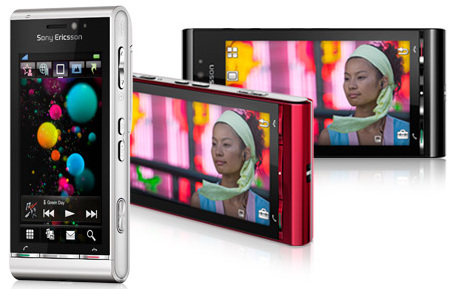
The Sony Ericsson's Idou platform is really spec'ed out, running on Symbian S60 smartphone OS and bearing a 12-megapixel camera. The actual hardware behind the Idou platform is called Satio, with a CDMA version called the Kokura, and the Satio has graced the FCC with its presence to obtain regulatory approval.


Via : pocketnow