Showing posts with label New Technologies. Show all posts

Monday, February 27, 2012

Nokia 808 Pure View : Some more camera details !


What's the Nokia 808 Pure View camera is all about?


Folks over nokiabuff.com did give a nice overlook at it based on Nokia documentations about that, it's a :

• Carl Zeiss optics of focal length: 8.02mm
• 35mm equivalent focal length: 26mm, 16:9 | 28mm, 4:3
• F-number: f/2.4
• Focus range: 15cm – Infinity (throughout the zoom range)
• Construction:
· 5 elements, 1 group.All lens surfaces are aspherical
· One high-index, low-dispersion glass mould lens
· Mechanical shutter with neutral density filter
• Optical format: 1/1.2”
• Total number of pixels: 7728 x 5368
• Pixel Size: 1.4 microns

The sensor actually has 41 megapixels, meaning it is filled with 41 milion pixels with 7728 x 5368 pixels in horizontal and vertical respectively. It has a 4:3/16:9 hybrid sensor that manages to capture equivalent field of views on both the aspect ratios, just like the N9/Lumia 800. So, depending on the aspect ratio you choose, it will use 7728 x 4354 pixels for 16:9 images/videos, or 7152 x 5368 pixels for 4:3 images/videos. This image from the white paper explains it so clearly :

So, the sensor will provide a maximum 38 megapixel image on 4:3 aspect ratio at the resolution- 7152 x 5368 and a 34 megapixel image on 16:9 aspect ratio at the resolution- 7728 x 4354.

 “Pure View” is all about insane amounts of detail on a single photo. How do they do it? Let me explain as simple as possible.

The camera has two sensor modes: “Pure View” and “Full resolution”. The “full resolution” mode is what I explained above, there are two options for 4:3 and 16:9 with 38 and 34 MP respectively, while in the “Pure view” mode, these are the options-


There, you have three options, 5 megapixels being the default, and 8/3 megapixels being the only other two options. So, why does it have very low MP counts, you ask? Well, for enabling some insane amount of detail in a single pic, even after 100% zoom, they have used something called “Pixel oversampling”. Take for example, 5 megapixels, the resolution would be 3072 x 1728. Each pixel of that resolution is actually a “super” pixel, which has image data from 7 neighboring pixels. So, one pixel has image data of 8 pixels, making the ratio of Pixel Oversampling(O’sam.) for a single 5 megapixel image to be 8:1. Similarly, for an eight mpix image, the O’sam. ratio would be 5:1, meaning one super pixel contains image data from 5 pixels. Thus, processing several pixels at once, makes the image much more detailed, like insanely detailed, with virtually no grainy image noise, that you usually get from any other camera phone, even the N8 has fine grain noise on every picture.Not only that, thanks to the fricking huge 41 mpix sensor, we can use some lossless zoom on all the pure view modes.

For example, the 5 megapixel mode will have maximum O’sam. at minimum zoom, and when the zoom increases in steps, the O’sam. decreases until the zoom reaches the exact resolution at the center of the sensor at pure 3072×1728. At the center of the sensor at 5 mpix resolution, the O’sa. would be zero. So, until the full sensor crop is utilized, the image quality remains largely the same, and hence, lossless zoom without having to use optical zoom or interpolation techniques. Since the data processed during all this manipulation is huge, the CPU+GPU cannot handle everything, so, there is a dedicated scaling chip that takes care of the O’sam. range when the zoom is happening.

This graph might help you with what I told about O’sam. ratios and Zoom range-


 So, basically you can achieve nearly 4x lossless zoom at 3 Mpix setting and as you can see, at 1:1 O’sam. the zoom factor is highest. Ok, it may seem a bit intimidating if I explain more, let’s get to the next big thing in 808 pure view, the Video mode!

The 808 can take full HD videos at 1920×1080 resolution at 30 FPS, and I love the fact that they have used the same concept of Oversampling in video too, hence creating some stunning detail, and upto 4x lossless zoom. Words can’t really describe how awesome the low light performance, just watch this video in 1080p-


There are other frame rate options for 1080p like 24 and 15, while there are video modes for 720p which offers 6x lossless zoom and nHD(640×360) which offers 12x lossless zoom! Just like the crop video mode on the Canon EOS 550D, but I hope it did the 1080p crop like the 808 

And coming to other intricate details of the camera unit, the aperture at f2.4 is fixed, Nokia says it is an advantage when compared with DSLRs with optical zooms that reduce the maximum aperture at full zoom, like on the 18-55 kit lens, the max. aperture is f5.6 at 55mm. But since the 808 has no moving elements, there is no change in aperture and you get lossless zoom like optical zoom at same aperture throughout. Not really sure why Nokia has mentioned it in the whitepaper.And as a consequence of this, the flash range and shutter speed/ISO don’t get affected at  various zoom ranges. The maximum ISO for the 808 is 1600. And for brighter situations, the handy ND filter is present, just like the N8 

And the focal length at 8.04 mm coupled with a f/2.4 aperture gives you a shallower depth of field but a narrower view than the usual cameraphones which have 4 mm focal lengths. For comparisons sake, let’s take the 18mm focal length in a kit lens, it offers a very wide angle of view, while 50 mm offers a narrower view but a shallower depth of field. Likewise, the 8.04 mm focal length will provide a shallower DoF, which will in turn provide a nice Bokeh. Really looking forward to that!

Coming to pixel level details, the 808 has a 2.5 times larger sensor than the N8, with it’s size at 1/1.2″ while the N8 was 1/1.83″. Moreover, each pixel on the N8 was of 1.75 microns in length, while the 808′s pixels are even larger. Not really sure what’s the size though. And coming to audio-

In combination with the world’s first implementation of Nokia Rich Recording technology, Nokia 808 PureView records best in class stereo audio with every detail. Whilst most high end smartphones can only record without distortion to around 110db, the Nokia 808 can comfortably continue to around 140-145 db, which is 4 times louder than conventional mics can record. Apart from that Nokia Rich Recording can also record very low frequencies also without any distortion. The combination of all of these elements means the  Nokia 808 records audio with almost CD like quality. It has to be heard to be believed. In terms of both visual and audible performance, the Nokia 808 simply has no equal.


Are those words sufficient for convincing you how great it is? Concerts and noisy places will be handled much better than the N8, which was already too awesome!

Also, apart from these details about the sensor, there is a very much improved auto focus in all the video modes like touch to focus, conventional focus, and even the UI is vastly improved, with something really cool called “slide zoom” . You just slide your fingers over the screen and it lets you zoom selectively, the frame.

What else?


specifications over www.nokia.com

Sunday, July 11, 2010

Nokia N8 : the best PMP mobile phone hybrid so far?

The best PMP (or personal media player) mobile phone hybrid is the new N8's label in this very speedy growing multimedia environment by home cinema choice ! And to be honnest, for me it'll be so only if Nokia allows playing native AVIs, well, anyway, HCC had an exclusive hands-on with the device, at Dolby Laboratories’ Wootton Bassett HQ, to really to grips with its multimedia functionality and here's some interesting quotes of their hands on :

HDMI out for HD and 5.1

The headline news is that this is the first mobile phone able to output high definition video and multichannel surround sound via HDMI. The N8 has a mini-HDMI output. An adaptor is supplied in the box. The mobile is the first to support Dolby Digital Plus, the next generation codec which builds upon the success of Dolby Digital 5.1. All DDPlus decoders are fully backwards compatible with first generation DD5.1, however the Plus suffix means that it can deliver high-quality 5.1 within a low bandwidth, puny bitrate environment.

This makes it attractive to both TV broadcasters and content owners looking to distribute high-performance files within tight space constraints.

To audition to the phone, we hooked it up to a regular home cinema system (large screen LCD TV, Onkyo AVR etc) and plugged it in via HDMI. The mobile’s GUI instantly appeared on the screen allowing us to browse through several screen loads of clips, comprising test footage and movie trailers. Holding the phone horizontally fills the TV screen. Our initial viewing session concluded with the 720p trailer for Tron Legacy, which looked and sounded fabulous.

The 720p video was encoded using MPEG 4 and the output looked crisp and detailed, while the DDPlus surround track was powerful and immersive. Subjectively, in the context of the system used, there was no difference between it and a standard DD5.1 mix from DVD.

 To learn more about the technology behind the phone, HHC interviewed Jonathan Jowitt, Dolby’s senior technical marketing manager, after their hands on session. To read this click here.

Wednesday, January 27, 2010

Mobile radar research concept by Nokia Research Center

The mobile radar demonstration shows how a mobile device can use an active radar sensor to measure speed and the direction of movement of approaching objects, just as traditional RADAR would.


You can view other projects over here !

Via : conversations.nokia.com

Thursday, December 24, 2009

Nokia Image Space : a new way to view photos

Just to let you know that Nokia Image Space is now available for you. It is a solution for showing a new view to your photos, as well as to those from your friends and other people.

You can currently sign-in to the service using your Yahoo! ID, as you do to your Flickr account, If you have Flickr account and a supported Nokia phone, you can get your content contextualized easily. Apart from geotagging from GPS, the photos will have full orientation information in the metadata. This allows spatial browsing of photos. Photos from different Image Space users are contextually linked between each other. This creates a better understanding of the place you are browsing.


When there are enough photos of a given area which have been made publicly available, Image Space generates a 3D presentation from them. This feature will be ramped up in phases during the next two months, so please be patient. You can see some examples now at Helsinki and Tampere.

Compatibility and system requirements
 
Nokia Image Space browser

- Adobe Flash 10 plugin for browser
- Firefox, IE or Safari browsers (Some differences in behavior between PC and Mac)

Nokia Image Space Capture for S60

- Tested on: N97 mini, Nokia 6210 Navigator, Nokia 6710 Navigator, Nokia 6720 Classic. Should work in S60 3.2 and 5.0 devices with inbuilt compass.
- Known issues: N97, some sensor issues with IS Capture


Via : betalabs.nokia

Monday, December 7, 2009

Fujitsu's F-04B cell phone splits in two, Optical Projector, 12MP Camera !

Lets see what is it :


To be out in April 2010 in Japan ;)

Tuesday, November 24, 2009

TAT augmented ID !

Augmented ID is a TAT concept that visualizes the digital identities of people you meet in real life. With a mobile device and face recognition software from Polar Rose, Augmented ID enables you to discover selected information about people around you. All users control their own augmented appearance, by selecting the content and social network links they want show to others. Modifying your augmented ID is easier than fixing your hair in real life and, of course, TAT Cascades will make sure you look great!

RedDish : Cascades powered UI !

RedDish is a TAT Cascades powered demo UI, developed for ARM Mali-200 GPU based hardware. It features hardware accelerated 3D geometry, taking full advantage of OpenGL ES 2.0 shaders and anti aliasing functionality. In RedDish, all contacts and communication applications can be accessed from one place. Navigation between applications in the foreground and widgets in the background is seamless.

3Dphone Media Browser by TAT

3Dphone Media Browser is the first of three demo applications developed by TAT within the 3Dphone research project. This demo shows a wrapping 3D list based on an amphitheatre layout, which is suitable for mixing portrait and landscape images. It is powered by TAT Cascades and runs on a TI OMAP3430 platform.

Thursday, October 22, 2009

Sports Tracker Breaks Away From Nokia To Form Sports Tracking Technologies

A few days ago Vaibhav from thesymbianblog pointed about Ovi Journeys, that was described as the evolution of the Sports Tracker application. On the same post, he received an anonymous comment pointing us to the Nokia Technopolis Innovation Mill, which revelaed that four new companies have been created through the Nokia Technopolis Innovation Mill IPR spinout and that a company called Sports Tracking Technologies Ltd was one of them.

This means is that the two member team of Jussi Kaasinen and Ykä Huhtala, the core developers behind the hugely successful Sports Tracker application have come together to start their own company Sports Tracking Technologies. This explains the apparent lack of development of the application and the subsequent stagnation. Nokia therefore is no longer directly behind the application but will turn into a client of the said company. The reasons for this lull, as explained by Jussi Kaasinen were intellectual property issues relating to the migration. We now also know that the team at STT has grown and is working on ‘feature enhancements and compatibility refinements for products and services which promise to remain wholly sports-centric‘.

Via : thesymbianblog

Wednesday, October 21, 2009

Telexy Networks: New Releases !

New versions of Telexy's applications released and they are now available for download from the Telexy Networks website (www.telexy.com).

These new software releases include bug fixes and several new features as requested by you our customers.

Following is a list of features and enhancements for each product:

New Features and Enhancements:

SymRDP :
 
- Added "Left handed" mouse support
- Added Zoom
- Added "Always Ask" Access Point support
- Added "Console" session support
- Added support for non-default RDP port

SymPlayer :
 
- Added touch screen controls (for S60 5th edition only)
- Added support for the phone's media buttons (including Volume Control)

SymNC (Telexy Network Commander) :

- Added one click copy/move ("Copy To..." & "Move to..." in "Files" submenu)
- SymRDP is now part of SymNC (for S60 5th edition only)

Also :

- Embedded components(:Cores) are installed on a drive selected by the user, but not on C: unconditionally as before
- Removed the annoying "Component missing..." warnings from the Symbian installer. However, this comes with a potential cost during uninstallation


If you have installed just one software product from the above list then there is no any specificity with uninstall. Regular uninstall procedure should be performed.

If you have installed 2 or more software products from the above list then please keep in mind that after uninstall of one of the product you may need to repeat installation for product(s) that you prefer to keep on your phone.

For example, you have two Telexy products "A" and "B". Product "A" was installed first and then "B". Two situations are possible.

1) You decided to uninstall the product "B". In this case everything will go normally.
Remaining product "A" is still operational.

2) You decided to uninstall the product "A" - this case requires special attention.
After un-installation of product "A", product "B" may lost some of components that are common for these two products because such component could be uninstalled during of uninstallation process for product "A". Therefore in this case the product "B" should be re-installed.
If you have more than one product from the above list, then all these products should be re-installed as well.

More details about this are available in User Guide for corresponding products, for example you may have a look at paragraph 6 of SymNC User guide available on this link: SymNC User Guide in PDF format.

Wednesday, October 14, 2009

Highlights from the Ovi Maps Satellite Launch Q&A

Remember that Nokia Satellite Launch we talked about last week ? Well late yesterday Nokia WomWorld hosted a little Q&A with a couple bloggers, to get to talk to the CEO of Digital Globe as well as representatives from the Ovi Maps service.

(Note: Many of these questions were asked by the othe Bloggers present at the event, not me).

==============

Answers from a Digital Globe representative :

Q: What does Nokia hope to gain by launching their own satellite? I realize that these projects have a long life cycle, so planning was started some time ago, but in the current economy, what potential benefits do they see from doing something this expensive?


A: The satellite is not a Nokia satellite, DigitalGlobe in launching and operating WorldView 2 satellite providing imagery collected to Nokia.

Q: As I understand it, DigitalGlobe provides data to many goverment and commercial agencies.

A: That is correct, we provide our imagery to commercial and government entities around the world.

Q: How exactly this would impact Ovi Maps. Better Images ? Navigation ?

A: DigitalGlobe provides to Nokia imagery as part of OVI Maps, the customers are going to benefit from higher resolution and considering the large collecting capacity there will be extented availability of our contents in many more countries.

The navigation experience is going to improve due to high resolution, especially for pedestrian navigation.

Q: Megapixel rating on the camera, producer of the actual optics ?


A: You can check out this link for more information http://worldview2.digitalglobe.com/about/ the optics components are built by ITT.

Q: What I want to know is what timeframe are we looking at before we start seeing the benefits of this launch.

A: We should release first image approx 90 days after the launch considering the calibration process required on the satellite.

Q: It can distinguish items on the ground what distance apart?

A: This satellite has very high native accuracy and we expect to have a good product to be used in offboard navigation.


Q: I’d heard about the proprietary online portal for clients to access your data. Is this something clients will link to in real time to its consumers, or will they download the data and use it in its own applications?

A: DigitalGlobe is an equal opportunity provider to all portals and mobile applications, we are planning to provide imagery to other customers as well.

Q: Can you give it an actual megapixel rating for laymen like me?

A: The resolution of the satellite is 50cm so we can clearly identify items on the ground.

Q: How much did the entire launch cost, including the satellite and launch vehicle?

A: It is difficult to comment on operational costs related to the satellite, the cost of WorldView 2 was approx $460 million.


Q: Can you tell us what regions will be benefitted first? When can I expect to see improvements around Asia, India specifically.

A: It is difficult to define who is benefit more from this new satellite in terms of geographic coverage as with the current aggregated capacity we can provide an annual update to the entire world’s land mass.

Q: What is the main purpose of this launch and the part that Nokia is playing in it??

A: The main purpose of the launch is to satisfy needs of our existing customers and complete the DigitalGlobe constellation of satellites to provide imagery to both commercial and government markets.

Q: Can I know since when nokia started this partnership with digital globe ?

A: DigitalGlobe and Nokia started their agreement in 2007.


Q: Is the new satellite going to be able to improve the ovi maps services such as routing ?

A: The imagery is not improving routing capabilities but they are helping tremendously as background information especially in pedestrian navigation and local searches.

Q: Was the satellite a response to the recent launch of the other satellite that was better than the WorldView1, a move to stay competitive, or just the progression of technology? How long do you expect to be the “baddest on the block” imaging satellite? And is TeleAtlas a customer as well as Navteq/Nokia?

A: We started building WorldView2 5 years ago so it is not a direct response to our competitor but more the evolution of our own offering in terms of technology, Because WV-2 has eight bands, CMGs for agility, and 1.1m aperture we can safely say that there are NO other advanced commercial satellites like WV-2 in operation.

Q: No megapixel rating on the sensor?

A: MEGAPIXEL – It is difficult to describe the WorldView-2 sensor in the same terms of a typical digital camera. The WorldView-2 sensor can collect a swath width of 16.4 km from an altitiude of 770 km at slightly better than 50cm resolution (US regulations limits us to 50cm) . To add to this, the sensor is capable of recording information beyond the traditional visual spectrum at a bit depth of 11bits which greatly increases the amount of information that can be captured. The imagery is downloaded to our ground stations and processed to a degree which can be then integrated into various applications and platform.


Q: Is the US military a customer as well, and if so, have they restricted the level of resolution to foriegn goverment agencies for strategic reasons?

A: The US government is an important customer for DigitalGlobe, as US company we are following the government regulations to provide our imagery according with the license that was granted to us.

Q: When can I expect to see improvements around Asia, India specifically.

A: Regarding India, we are working to complete the global coverage and we need to coordinate with the Nokia OVI team to release additional imagery according with product plans.

Q: For how long do u all expect the satellite to be in operation for?

A: The design life of worldview class satellite is 7.25 years.


Q: Can Digital Globe control the orbit of the satellite from the ground? And can they place the satellite in a certain orbit at a client’s request, or must they wait for the data when you get it? And how “dumbed down” is the imagery to commercial vs. government agencies? Will there be images from multiple angles to possibly form 3D imagery via software?

A: The satellite makes several orbits per day and is aligned with the sun. In these orbits, DigitalGlobe is able to “point” the satellite to acquire different areas which are prioritized by Nokia and other customers. There is no plan to change the final orbit of the satellite.

=====

Questions about Ovi Maps :

Answers from Pino, from the Ovi Maps team in Berlin.

Q: I was wondering whether all existing Ovi Maps capable devices be able to get the benefit of these better images or will it be restricted to a few.

A: Well, as soon as we have new images for our maps, they will be available OTA to all the Ovi Maps users.


Q: As I understand it the N900 does not have voice navigation for now despite having Ovi Maps, so when can we expect that to be included? Will future Maemo devices also get the benefit of this improved data or will it be Symbian centric for a while. Even S40 has an Ovi Maps client if I am not mistaken.

How do u all expect to promote the s40 version of Ovi Maps? Since most people who buy s40 devices arent all that experienced ?

A: Both Ovi Maps for Maemo and S40 are going to be improved soon in order to include navigation too.

However the current focus for Ovi Maps is the touch version of S60. At least until end of November when the current Ovi Maps Beta is going to be commercial.

Unfortunately I can’t commit to any timeline for navigation on the N900 ;-)

========

Answers joined in by Luis from Nokia in Espoo.

Q: Tell us how actually the OVI maps are befitted from this,is it only in the signal reception department or will there be added richness to the maps application?


A: This is not a GPS satellite, but an imaging satellite. The way it benefits Ovi Maps is by getting better satellite images. These can also be used for other purposes such as extracting terrain data.

Q: So can Luis or Pino please tell us when will we see improved map data for India as even after what seems like ages only a few cities are covered. Google Maps and other companies have much more extensive maps.

Just how exactly do they expect Maps 2 become social?Is there any chance of some kind of London Transport app using the SDK?

A: It’s difficult to say right now when we are going to get better map data for India

regarding the social part: there are some features that have been launched in beta (Ovi lifecasting) and more coming (Ovi journeys).

The SDK is also available and everyone can register for that, so now it’s up either to a developer to bring something for the London Transport or the London Transport Authority itself to develop an application with the Ovi SDK.

Q: Ovi Journeys sounds awesome. It has part sports tracker functionality ?


A: It’s the evolution of Sport Tracker :-)

=============

And that’s it. As you can see we came out of that Q&A with a wealth of Information. I’m particularly interested by the “Ovi Journeys” app they mentioned towards the end, which is apparently an evolution of the much loved Nokia SportsTracker app.

As you might already know, development on the Sports Tracker app for S60 was halted recently & noone seemed to have any idea what was going to happen to it.

Well, atleast now we know that we have “Ovi Journeys” to look forward to.


Via : zomgitscj

Sunday, October 11, 2009

Video Autofocus On Nokia N900

Mark Guim from thenokiablog has published a video captured with the N900 showing autofocus like on the Samsung Innov8 :

Thursday, October 8, 2009

Nokia in Space : Nokia’s Imaging Satellite Launch !

Boeing will launch Digital Globe’s WorldView-2 satellite aboard a Delta II rocket procured from United Launch Alliance (ULA) today i.e. Thursday 8th October in California. The launch will be broadcast live and in high quality on a dedicated channel, with the feed kicking off at 1115 PDT (1915 BST). WorldView-2 is the first high-resolution 8-band multispectral satellite commercially available. The new bands support greater levels of feature identification and extraction, more accurate change detection, and a realistic mirror image of the world’s natural colors.

If you are wondering what does any of this have to do with Nokia, then read on. In Feburary this year Nokia and Digital Globe had entered into an agreement to bring the real-world perspective of high-resolution satellite and aerial imagery to Ovi Maps in order to improve the global driving, hiking and walking navigation capabilities for consumers who use these applications.


Nokia Satellite

The idea behind the integration of Digital Globe’s high-resolution world imagery content is to increase the functionality of Ovi Maps by revealing more details than standard street level mapping views, and also providing peace-of-mind for precision and accuracy in off-road navigation — a feature of special interest to hikers and walkers.

All of this will be done through streamlined technology integration and development of a proprietary format for delivering imagery to Nokia. Users will then have quick, easy and seamless access to a wide range of global high-resolution imagery from DigitalGlobe’s comprehensive ImageLibrary sourced from its high-resolution satellite constellation and aerial network. All of this will in turn help take turn-by-turn, street-by-street and city-to-city navigation views to a new level.


Via : thesymbianblog

Thursday, October 1, 2009

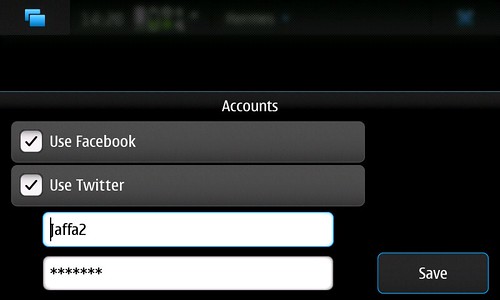
Sync Your N900 Contacts With Twitter And Facebook With Hermes !

Hermes was the god of communication. On Maemo, he'll make sure your contacts have photos, birthdays and other meta data from your friends on the Internet.

As you'll see, you can choose the information providers in Hermes' accounts dialogue.


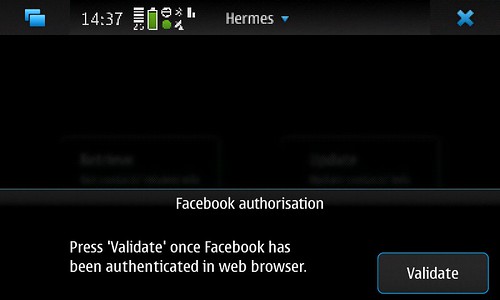
Facebook will open in the browser to authorize the app (and your account) before Hermes can continue.


Contacts view after Hermes has run.


Via : flickr

Tuesday, September 29, 2009

N900 gaming case mod project

In case you have no idea on pushing the nokia N900, it’s a bone fide competition where hackers, designers and creative types can submit their ideas, the winners bagging funding, support and kit to make them happen. Once the ideas are reality, they’ll be put on show in Nokia Flagship stores around the world.

One of several and original project, is the idea to create a shell around the existing N900 to make it large enough to be able to place gaming buttons. On each side of the shell we want buttons for the thumbs and on the shoulders some more for the index fingers. On the side of the case a battery pack is placed to give the the N900 and case extra battery power. This will allow us to play for hours and hours. If room permits we plan on adding more utilities like lights, speakers or a electric shock generator.The shell and controls are ergonomically designed for handheld use. This will ensure the device can be used while standing or in a car a park or anywhere else.


This is a project to create a N900 case-mod to allow a better gaming experience on the new Maemo N900 device. It is a submission in The Nokia PUSH N900 contest . The N900 is Nokia’s first Maemo device with enough CPU and graphics power to run comfortably one of the many game console emulators available the the Maemo platform. A quick look at The Maemo.org games download page shows that already may games have been ported to Maemo. But there are a few challenges with using the Maemo devices for gaming. One of the challenge with running those games is handling user input as Nokia’s NXX0 series device don’t have input methods that are very well suited to gaming. An second challenge is keeping battery life when running emulator because they are CPU intensive and power saving features like dimming the screen are unwanted. This proposal tries to address these challenges while keeping the N900 a portable device.


This is a video explaining a little more the rationales behind the project. This is a sample not the real thing

More to read !

Saturday, September 26, 2009

N900 as Identity controller !


onedotzero is a contemporary, digital arts organization with a remit to promote innovation across all forms of moving image and motion arts.

It’s activities encompass public events, artist + content development, publishing projects, education, production, creative direction, and related consultancy services.

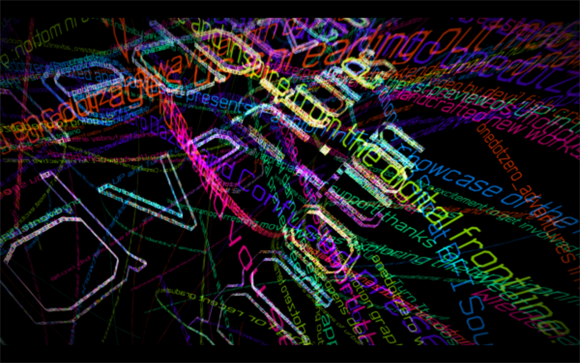
This year, Wieden and Kennedy with Karsten Schmidt (aka toxi) created a Processing application that collects conversations around onedotzero from the web (Twitter, Flickr, Vimeo, Facebook and blogs) and generates the onedotzero identity, the text was projected using a Nokia N900 ! (App written by Gary Birkett)

Visitors to the festival can move, re-write and manipulate the projection through a bespoke user interface created for the new Nokia N900 by Gary Birkett which harnesses the phone’s accelerometer and touch screen to create an instant response in the animation.


So instead of utilizing a Wii remote or Apple iPhone, both familiar, handheld devices with accelerometers in them, W+K opted for the jaunty, new soon-to-be-released N900 from its client, Nokia.


And Gary created an interface for the N900 for the accidental gameplayer handed the device. His app interprets a user’s twirling or shaking or screen-drawing for a seventh computer in Karsten’s array, which causes the huge projection to respond instantaneously.

To manage this, Gary used his own liqbase framework to create his application. And, like other liqbase modules, this controller will be distributed as open-source software.

Another video :


More to read over here !

Thursday, September 17, 2009

Nokia Braille Reader : SMS for the blind and visually impaired !

Nokia Braille Reader gives SMS for the blind and visually impaired. It captures received SMS messages and brings them to the foreground for reading using Braille and tactile feedback.


The application has been developed in a joint project between Nokia, Tampere University and the Finnish Federation of the Visually Impaired.

Download it !

You can read full instructions over here !

Wednesday, August 26, 2009

ARound: Augmented Reality Browser Application !

Over the last year many so-called "augmented reality" applications have been popping up, specially on the Android platform. While the concept is not new (research on the proper field of Augmented Reality dates back to the '90s), it has generated some media attention lately.

Unfortunately there is no mention so far of any similar application* on Symbian smartphones, so this project aims to fill the gap by providing a prototype application featuring the use of sensors, camera and location based services.

[*] Though we could consider Nokia Research Center's MARA project (2006) as the first attempt to bring this functionality on a Nokia smartphone.

The application overlays the image stream generated from the camera with markers of "Points of Interest" around the user. It has been developed for the Nokia N97 and Nokia Navigator devices.

Making use of plugins allows third-party developers to customize the application at different levels.


This is a basic diagram of the application's functionality:


The overall scene is dictated by the position and orientation determined by the sensors, which combined with the data retrieved from the source form the overall frame.

Features

- Use of Data Source plugins, which allows third-party developers to add their ow n sources of information.
- Display different details of each point of interest, including hiperlinks to external resources.
- Being a pluggable component makes it possible for third-party developers to include it as a customized view into their applications.


For download :

S60 3rd edition FP2 (Nokia 6210 Navigator, 6710 Navigator, 6720 Classic, 5730 XpressMusic, N86)

S60 5th edition (Nokia N97)

Source : seqpoint

Sunday, August 23, 2009

EDoF : Extended depth of field imaging on the Nokia E55 and 5630XM !

FullFocus or EDoF (Enhanced Depth of Field), rather than having an expensive auto-focus mechanism, the idea is that a cheaper fixed focus camera can be dramatically improved by using a custom lens which has been designed to focus the RGB components of light differently. When an image is captured (effectively three 'photos', one for each of the RGB components), every part of the photo's viewing area is analysed, with the sharpest of the RGB images determining the detail used for that part, with the other image supplying appropriate coloration. In this way, the normal depth of field for a fixed focus camera is extended and objects a metre or so away can be captured fairly sharply, something which wouldn't be possible with a vanilla fixed focus camera.

The depth of field of an imaging system is the distance in the object space in which objects are considered to be in focus. As such, extending the depth of field of an imaging system will extend the distance over which objects are in focus. Traditionally, increasing depth of field is performed by decreasing the size of, or stopping down, the aperture of the lens. This method, however, drastically reduces the amount of light gathered. For example, stopping down a lens one F-stop reduces the amount of light passing through the lens by a factor of two.

So, instead of using auto-focus, this camera comes with idea of getting the fixed focus with custom lens that designed for focusing differently RGB components of light, in other words, EDoF (Or EDF) does Auto Focus “automatically” without that looping back and forth trying to get the focus right. It should be much better than the normal Auto Focus wich it means it is able to produce 'more focused' images than standard fixed focus camera. It not quite as good as a full auto focus system, but it is a lot closer and is cheaper to implement. While there are some requirements in the lens the majority of the work is done by software.

According to rumors, the full focus feature in these models comes from Tessera.

Source : allaboutsymbian (here and here), meyerinst

Saturday, July 25, 2009

3D Carl Zeiss Cinemizer Headset

The below video showcases the 3D headset, enabling you to enjoy movies, games, live streaming – anything on the Nokia device screen – in full 3D.


Andreas Klavehn, the Senior Sales and Marketing Manager at Carl Zeiss discusses the technology behind the product and the challenges Carl Zeiss faced.

The headset is compatable with all Nokia products with a TV-out signal but is only currently available in Germany.

Source : zomgitscj